
- Our next call is on Thursday, Oct 29 at 2PM EDT
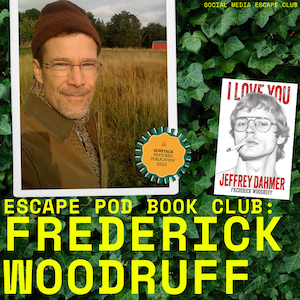
Frederick Woodruff is joining us to share the story behind his book “I Love You Jeffrey Dahmer,” and what it took to bring it to release.
We’ll start with a quick check-in, hear from Frederick, and open the floor for questions about the book, the choices behind it, and the work of finishing and publishing something like this.
Then we’ll open it up to everyone, widening the conversation from the work of publishing your own book to how that kind of work encircles all our lives and to everything we’re making.
So, “Google makes a privacy policy exception to use your Gmail and Photos data for ads,” according to Android Authority:
“This doesn’t mean Google automatically scans your private emails and photos to serve ads. The exception concerns information users choose to share with eligible services. Google also maintains that it doesn’t disclose personally identifying details, such as your name or email address, to advertisers without your permission.”
Everything is seemingly a grey-area when it comes to what Google is doing these days with AI and your beloved email. Oh, and Google cutting down 250,000 trees for a data center. Sure, why not?
As we’ve talked about on multiple member calls, you don’t need to leave Gmail and shut down your account tomorrow, it’s a process. Decoupling from Gmail also means figuring out how to decouple from Google Drive, Calendar, and so much more.
The biggest thing; start small. Sign up and try Fastmail or Proton (get 60% off a 12 month plan, affiliate link), and give is a test drive. Subscribe to a few newsletters and FWD some emails from your Gmail account into your new inbox.
Explore alternatives to Drive with Infomaniak’s kDrive or Proton Drive (affiliate link). There are many options out there!
Again, I’m not telling you which service is the best. You need to start an account with some of these services and see what feels right to you. If you’ve been using Gmail for 15+ years, a lot of these new services are going to feel alien, so remember to break up with Gmail at your own pace.
David Sparks writes about the Apple ecosystem at MacSparky. He posts videos from time to time on YouTube, and recently had one hit a million views.
“I can tell you that after my big successful video, there was a part of me … just for a minute … that thought, “Hey Sparky, how can you make every video a million-view video?” The answer is to start letting the algorithm drive and planning content around views rather than whatever it is I actually want to say.
Fortunately, I didn’t think about that too long.”
David makes the videos he wants to make. He’s not trying to win YouTube, he’s just making videos and well, hey – hosting is expensive, may as well put them on YouTube!
That’s what we’re gonna talk about in our upcoming “Finding Your Cozy Corner on YouTube” Escape Pod Zoom calls in November. See the full schedule here.
I know two people who’ve sold offers with a Google Doc and a PayPal link.
No amount of automations or sales page H1 text will make up for trust, and that’s how those two people did it. People trusted them, there was an offer that fit, and sales were made.
So don’t worry too much about which email platform you’re using, or if you’re using the right CRM – are you building trust every day? Does your website build trust? Do people get to hear you and see you enough to trust you enough to give you money?
Meta One, huh? The Meta subscription thing, where you pay a monthly fee. It’s not available for everyone yet, but some people are starting to see it: you have to pay Meta a monthly subscription to include links in your posts and in your reels. Supposedly they’re also starting to delink the links people put in comments. It’s only a matter of time before they come for the link in bio.
So what do we do? If you rely on Instagram, if you rely on Facebook, if all of that is the driver to the things that you do, if that’s the only way to get the word out, what do you do if you don’t want to pay $8 a month or $20 a month for two or four or five links?
The best time to have gotten away from these platforms was five years ago, three, two. The second best time is now.
(more…)Instead of working so hard on trying to get people from social media to your newsletter, just send a newsletter.
Instead of starting a YouTube channel, a new social media account, or whatever else is the hot marketing tip of the day, send a newsletter.
The people who subscribed said two things when they gave you their email address:
- I trust you.
- Tell me more.
If those people aren’t already telling all their friends about your work, fix that first.
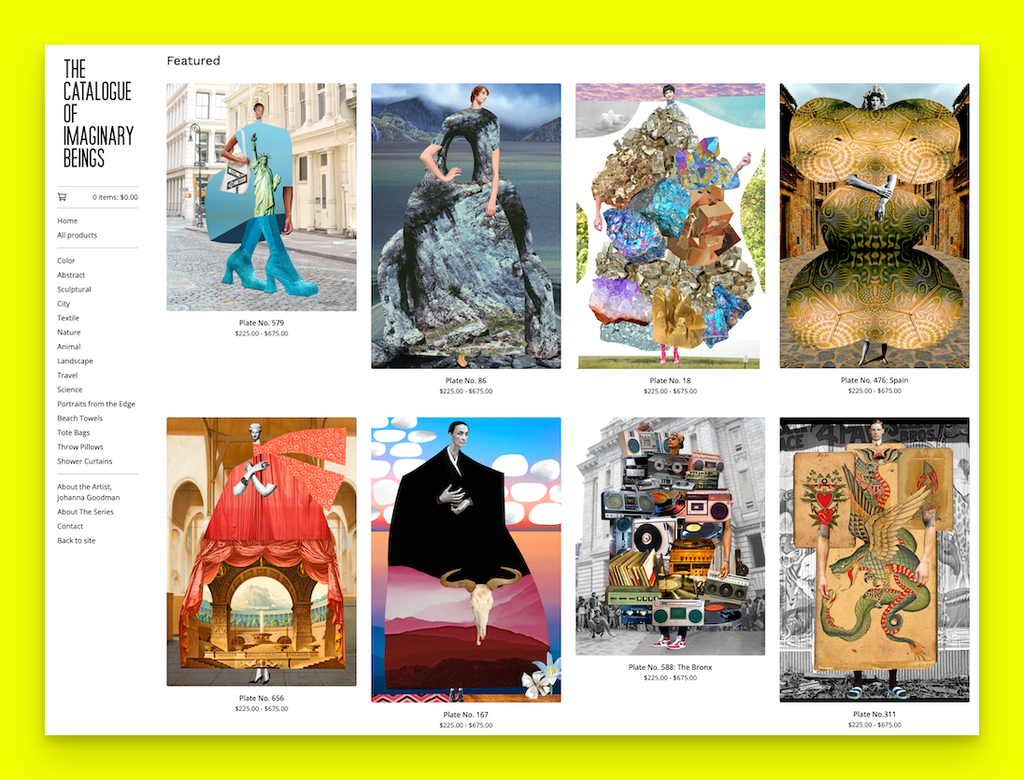
I discovered “The catalogue of imaginary beings” from the Not-Ship newsletter, which I found on Hacker News.
Social media makes it so easy to discover similar artists, but at breakneck speed. This from Vivian Fong, in “you scroll for hours but remember nothing.”
“… short form content, or addictive social media, allow users to rapidly context switch, and intensity switch, which leaves no breathing room between unrelated stimuli. We scroll and we remember nothing because our brains are not mentally integrating or consolidating.”
Stepping away from social media can be jarring because we’re no longer drinking from the firehose. When we slow down and drink from a glass, it feels slow. It’s no longer bottomless like social media, and if we drink all the water, we need to get up and refill. There’s friction, a bit of inconvenience.
I’m not saying we have gotta go back to corded phones and record players, merely saying the techbros would love for us to forgot that we can discover amazing things without them.

The reason I talk about websites and RSS and building a cozy email inbox is because if we want to escape social media we need someplace to go.
I went to the New Jersey shore this weekend; colder temps, fewer crowds, lots more parking. I saw monster trucks and ate pumpkin pancakes and ran 5 miles in the rain. It was perfect.
The “trick” of spending less time on social media is spending more time on other things.
Deleting an app is the easy part, but then what?
It’s not hard, but it’s hard to do.
For years we’ve posted fun stuff on social media, but then we treat our email list like an ATM machine.
“I recently saw a Reel of an artist explaining how they weren’t making sales because the Instagram platform was limiting their reach.
I clicked around and found their website (it was a store), and at the bottom they had an email sign up form, so I subscribed.
A few weeks went by, and by the time they sent me something, I had no idea who it was from.
This creative person, this spreader of whimsical words and imagery, posting daily their delights and magic. I subscribed, basically saying “hello, keep in touch.”
But instead of their magic and art, I got a menu.
A list of product images, prices, and the “BUY NOW” buttons below.”
That’s from a post I wrote in 2023, and sadly it hasn’t gotten any better.
This is a club for creatives, small business folk, and just about anybody else looking to break up with social media and big tech.
🏳️🌈🏳️⚧️🇵🇸
→ See our upcoming Zoom schedule
I’m Seth Werkheiser! Get in touch: seth@socialmediaescape.club
Subscribe via RSS (What is a RSS?)