
Category: WorkCategory: Work

The reason I talk about websites and RSS and building a cozy email inbox is because if we want to escape social media we need someplace to go.
I went to the New Jersey shore this weekend; colder temps, fewer crowds, lots more parking. I saw monster trucks and ate pumpkin pancakes and ran 5 miles in the rain. It was perfect.
The “trick” of spending less time on social media is spending more time on other things.
Deleting an app is the easy part, but then what?
It’s not hard, but it’s hard to do.
This right here from Emma Orlando is basically how our week Social Media Escape Club calls started:
It didn’t take long for social media to enter the chat because it has a funny way of stealing the show even IRL spaces these days. As the coffee went from warm to tepid, we lost ourselves on the trail of online exhaustion, more specifically the fact that it’s a bullshit metric measuring people’s ability to be in the room and how samey it all feels nowadays.
The exhaustion. The bullshit. The shame of some random niece you know being able to go viral, but you can’t even get 10 people to like a post.
I’m not saying deleting social media is for everyone, but if it hurts, if it’s painful, if it’s making you feel bad – none of those things can be good for your art, your business, your mental well being.
There are recovering musicians who don’t play bars.
As creative, magical, artistic beings we can find other ways to do the work. Are the platforms built by techbros the only way to flourish? I think not!
The quote above hits on something else, too – “the chat.” Talking with other people about the pain is the best way to beat it. Social media loves to isolate us, make us feel like we’d be lost without it. That sounds like “toxic relationship” langauage to me, and I want nothing to do with it.
So keep talking with other people. Keep the conversation going, in person, on the phone, in a Zoom call – whatever you have to do to get the feelings of exhastion and grossness out of your system, and find ways to replace it with better vibes.
Finding your people is about signals, it’s about risk, it’s about trying something without knowing how the finish product shows up.
Posting on social media will get you near instant feedback, like eating a cookie. In the moment it’s great, but not a great long term strategy.
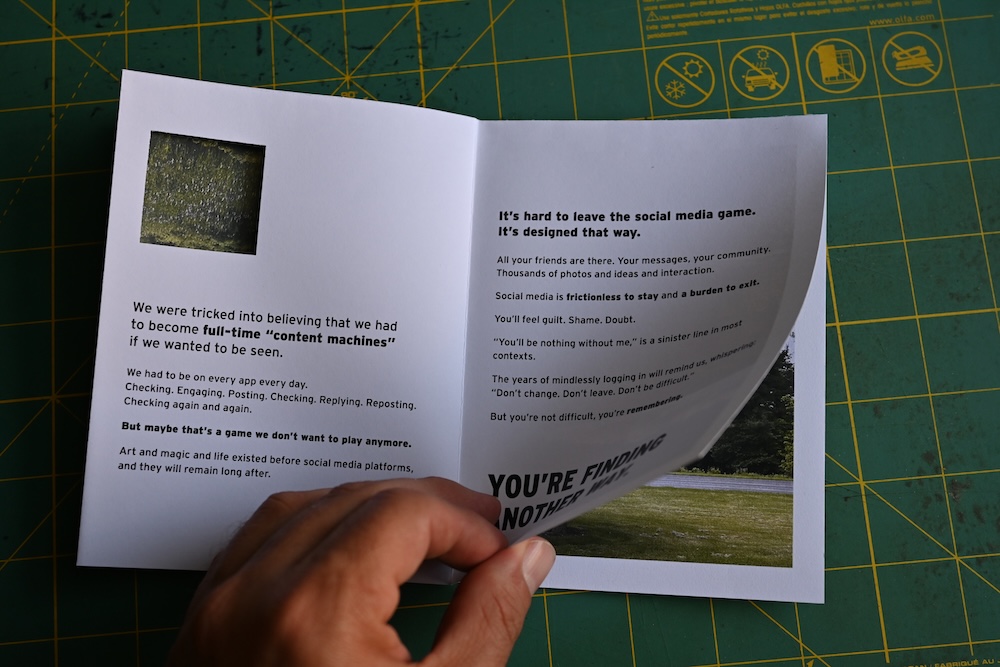
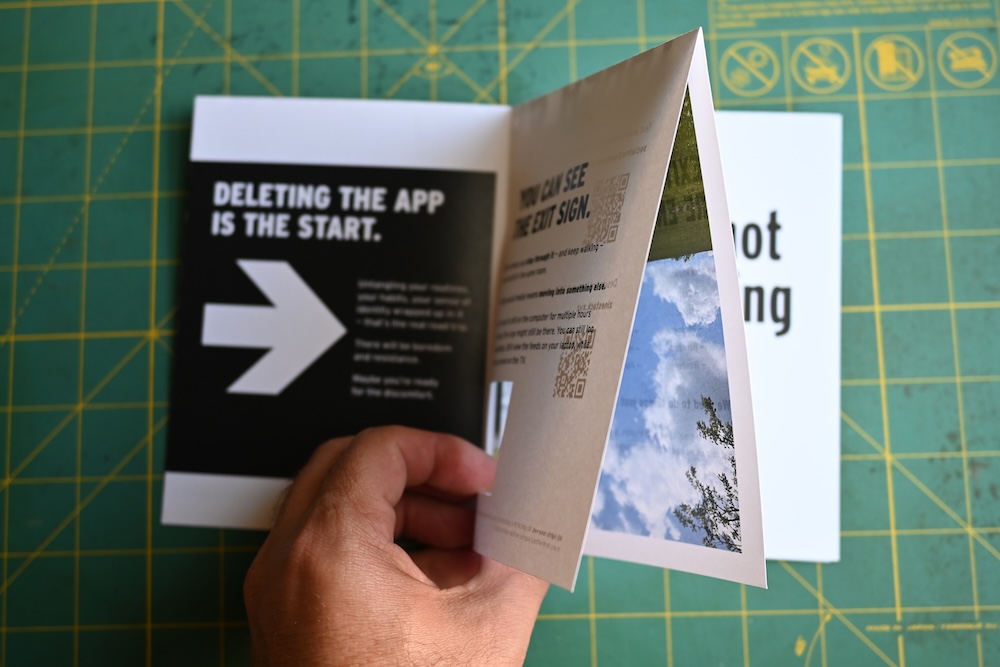
So Jen Mayer | Makeist of Zinestack and I collaborated on this EXIT ≠ DELETE zine. The photos here the deluxe version, and you can grab a digital copy to print at home from Jen’s Five on Friday post here.
We met awhile ago on Substack, via Notes probably and some Escape Pod Zoom calls, and we started working together on this zine project in June of 2025.
So really, finding your people, and then sometimes doing things with your people, can take a minute. And “finding your people” never ends. Today’s people might not be next year’s people, because you’re always growing and changing, just like everyone else!
WHAT’S THIS HAVE TO DO WITH SOCIAL MEDIA ESCAPE CLUB?
“Deleting the app is the start,” as I mention in our EXIT ≠ DELETE zine. We’re leaving, but we’re entering into something else, which is why I stress the whole “find your people” thing. If you’re trying to get away from social media, it makes sense to hang around other people who think the same thing. The journey isn’t fast or clear, but it just makes sense to go along with others.
So while this week our Escape Pod Zoom call wasn’t “how to get 1000 new subscribers” or “get my Instagram followers to go paid on Substack,” well… we’re just a bunch of artsy, creative weirdos who like the adventure of breaking up with big tech, spending less time on socials, and oh yeah – doing stuff.
I don’t promise results. There’s no map. And I don’t have all the answers. But we get where we wanna go together, so if that sounds fun, come along for the ride.

Doing things in person, guesting on a podcast, going live – these are things with other people, and it’s sort of the foundation of everything, and it can be terrifying.
Underneath that is tension. As Seth Godin says, “this might not work.”
Why bother going to an open mic night when you can just post something on social media and get 39 likes?
Why gather with other creative people when a vertical video might get 10,000 views?
I think about it like this – imagine if you were in a group chat with Hayley Williams. Right? Or whatever other artist you admire, imagine you got to swap messages with them throughout the week.
The other people in all of this isn’t just for the opportunities is might present, but also in helping build the belief that you belong. That you matter, that the art you make matters, that your ideas and dreams aren’t ridiculous.
Michael Gilbride and I spoke about this a bunch yesterday, about community and IRL gatherings.
Neither of us have all the answers, but when get together with other people we get closer to figuring it out.
What’s interesting from today’s Tool Time Show and Tell call was how it eventually got to paper. Like notebooks, planners, wall calendars. We talked about how the brain reacts different to writing with a pencil, in a different way than just typing.
It’s not just a pencil, it’s a tool. For centuries we wrote, physically, and there were tools involved, that we used with our hands.
You can have music playing all day on your computer, but with vinyl and CDs you need to physically interact with them.
There is no infinite scroll with physical objects. No endless playlist.
I can add 100 things to my todo app, but there’s only so many things I can write on a legal pad.
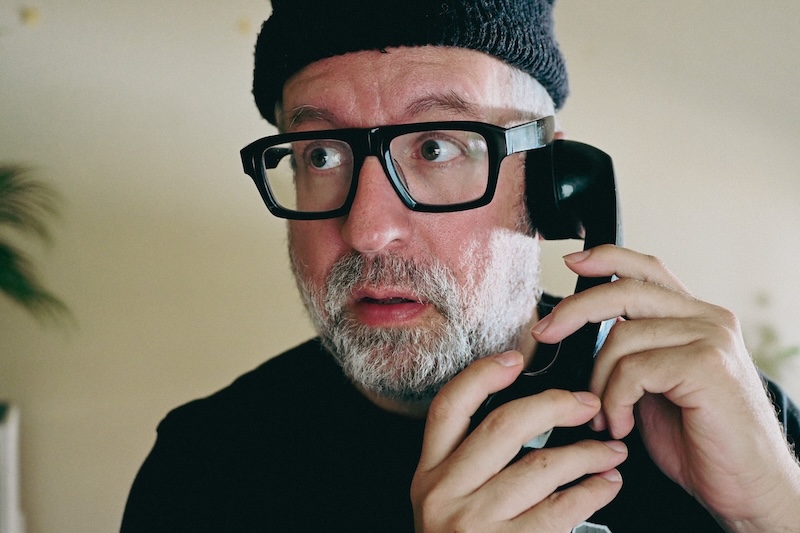
This is a club for creatives, small business folk, and just about anybody else looking to break up with social media and big tech.
🏳️🌈🏳️⚧️🇵🇸
→ See our upcoming Zoom schedule
I’m Seth Werkheiser! Get in touch: seth@socialmediaescape.club
Subscribe via RSS