
Never forget that corporate vultures swooped in and wrecked blog culture with their SEO posts and 13 display ads, and said “wow, blogs suck now!”
Then those crooks rolled out their shiny social media platforms – “wow, so clean! Who even needs a website?!? LOL!”
Now everyone’s ideas and posts were readable, without pop ups or takeover ads. It was bliss!
But the pivot to video (which was based on a lie) got writers fired. Sites shuttered because social media sites throttled links.
We’re learning everyday that maybe centralized kingdoms of power maybe aren’t great.
The decentralized internet is already here in the form of domain names, websites, email lists, and RSS feeds. We don’t need to wait for anyone, we can just decide today where we spend out time and energy.

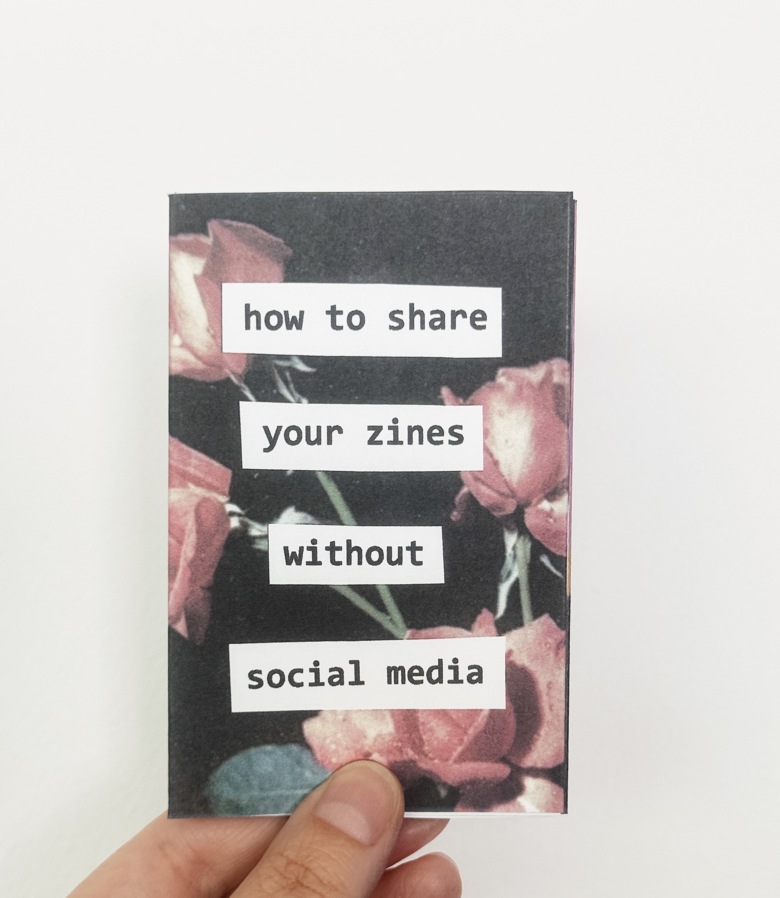
Veronique put out this wonderful zine, “full of tiny ways to share your zines without using social media.”
There are so many places for us to share our work outside of social media! They might not go “viral,” or be seen by thousands of people, but that’s okay! Social media sold us on the idea that vanity metrics mattered, but as we’re learning they really don’t. Just look at all those people with six-figure follower counts on Instagram with just 19 likes on their posts. It’s rigged!
See all Veronique’s zines here.
I’m a big fan of one-page websites, and How To Leave Substack is one such site.
We’re discovering more and more that centralized kingdoms of power are not the answer. Especially when such a platform has no back ups of your work when you inadvertently delete something, or when they send a push notification with a fucking swastika, or goes quiet while a known Substack Bestseller is accused of plagiarism.
I understand the “Asking Authors To Move” section of the How To Leave Substack website. But trust me, moving ain’t easy, as Tara McMullin wrote about this back in “Substack Has a Nazi Problem” era (Nov 2023),
“There’s the work that goes directly into making a move—researching the options, exporting and importing old content, learning how to use the platform, designing your profile or site, moving your audience, etc. There’s also the work that goes into establishing yourself within the network of a new platform, answering questions from your audience about the new platform, and figuring out what kind of content is going to work best on this new platform.”
It took me a solid month or two just to export my paid members to Memberful. I was afraid I’d break something, that some setting would be left un-checked and I’d double charge my members. Or have to refund everyone.
Working with Substack, turns out, is precarious.
There’s a lot of people who probably want to move, but many don’t even know what the options are at. But trust me, I’m telling lots of current Substack authors that they can move their paid members to Memberful.
Looking to move your paid subscribers off of Substack? I’ve moved mine to Memberful.
Got questions? Book a 1:1 call here, or explore my Email Guidance offering.Angela Hollowell (Please Hustle Responsibly) and I talk about stepping back from algorithm-driven platforms like LinkedIn and Instagram to build slower, calmer, more sustainable creative practices.
Angela on her reason to spend less time on LinkedIn:
“I’m not tempted to leave LinkedIn because my LinkedIn reach has gone down. I’m tempted to leave LinkedIn and posting on any social media platform regularly because of the time that it takes for me to do that when I could be spending more time writing a better long-form article
Me on websites:
“I think curation is the big part of of like you came to my website and this is someone asked me like oh well why doesn’t my website my website doesn’t get the same engagement as as say a LinkedIn. Well yeah cuz LinkedIn is built for engagement. There’s all these things to click and do and this whereas your most websites are just like here’s a big picture here’s eight links here. What do you want me to engage with?”
Angela on doing the work, rather than writing everyday on LinkedIn:
“The thing I’m most known for now, and where I’m getting a lot more recognition as a writer, producer, and film director—is from (my documentary). Way more than I did in four years of writing every day on social media. Yeah, that project took me six months to make, and then another year basically doing a film festival circuit. But it has paid off exponentially. I try to remind myself of that when I start thinking, “Oh, I should post this on LinkedIn.” It’s like—no, I shouldn’t, actually. I should let it cook.
And this is me, talking about spending less time on social media, and seeing where that can lead:
“I started doing my my weekly Zoom calls with my paid members like a year and a half ago and let me say, when I started them I was scared out of my mind. Like, “who who am I to like host Zoom calls?” Now I get like 10 to 15 people. I had six or seven this morning at the last minute. It’s amazing. But like, that work and not being on social media and doing that kind of quiet ,behind the scenes thing… now I’m ready for whatever.”
I hope you get something from this chat! If you have questions, please get in touch: seth@socialmediaescape.club
Recorded live on Substack, July 28 2025.
Great line from Skyr0 at about the 1:20 mark:
“Social media just completely broke me, rewired my brain, and changed me for the worse. I’ve had multiple times of burnout, and I guess that’s kind of just the nature of short-form content. But honestly, at this point, I feel like my future fans—wherever they are—they aren’t on these apps, and it’s just not the place to be anymore for me.”
It’s possible your future fans aren’t on social media.
The deal with a blog is simple. You show up, and the author says “here’s where we’re starting today.”
You open Instagram, the algorithm says “here’s where we’re starting today.”
Many modern websites say “you decide.”

As Seth Godin recently wrote:
A disciplined menu structure doesn’t limit user choice, it increases it.
Where are we starting today?

If you want someone to sign up for your newsletter, give them a link where they can do just that.
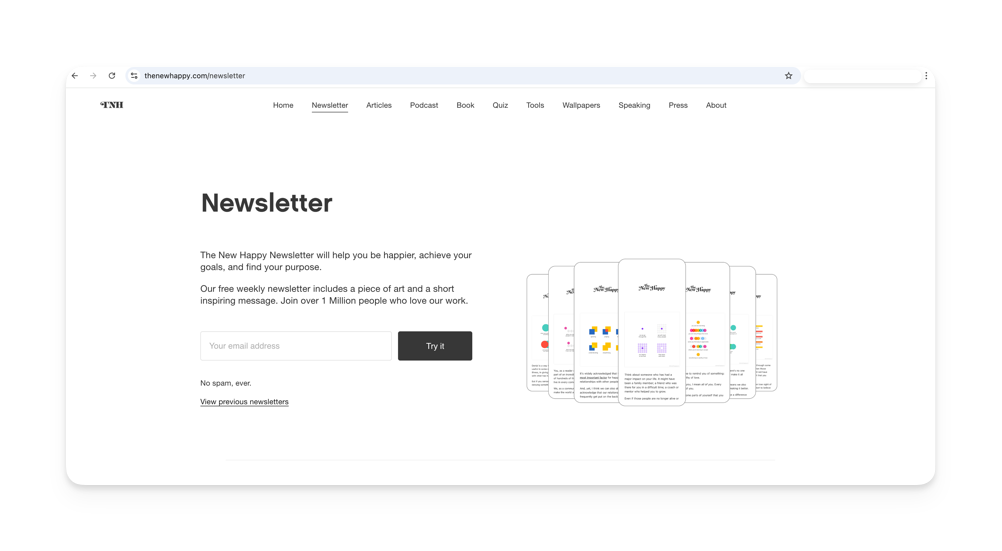
This is what The New Happy Newsletter does very well.
Remove all distractions, eliminate the noise, and build your email sign up page to do one thing – get someone to sign up for your newsletter.

Let people see what they’re signing up for. Let them click around and get a feel. People don’t give up their email address easily, so make a good case.
This from The Creative Rebel podcast with Stephanie Harrison – listen here.
Jon Gruber of Daring Fireball taking aim at Google for killing the GOOG.GL shortlink:
“I trust Google with almost nothing long-term. Mark my words, they’re going to do this with Gmail accounts eventually.”
Hey, nobody uses email anymore, right?
You’re tired of social media, but wondering if there’s life after the newsfeed. That’s exactly what we figure out here – together. 🏳️🌈🏳️⚧️
→ See our upcoming Zoom schedule
Say hello. Ask about working together. Tell me how you’re doing: seth@socialmediaescape.club
Subscribe via RSS