
Category: TechnologyCategory: Technology
It was only recently that we were expected to always be available. This from Nicholas Bate (via Patrick Rhone):
“Life was shaped, from edge to edge, by scarcity and by natural limits. The shop shut. The night fell. The letter took three days. You were, for long stretches, simply out of reach.”
We drove across town to pick up groceries without a phone. We drove across state lines. We drove in snow storms and heavy rain.
Without a phone.
Yes, of course the phone comes in handy in emergency situations, but now everything is seemingly an emergency sitatuion, from breaking news, shipping alerts, album announcements, Slack notifications.
When are we ever out of reach?
Our friend Amelia Hruby, PhD is moving their Substack operation over to Ghost. They go on to explain that inactive subscribers won’t be automatically ported over, leading to this curious point from Amelia:
“you know where most of those inactive subscribers come from? 👉👉👉 The “Substack Network.” Which means that a lot of the amazing growth Substack is promising me (and bragging about in my stats dashboards)… is mostly resulting in inactive subscribers.”
I wrote about this experience (Substack Follows The Enshittification Playbook), and it aligns with what I’ve seen: the majority of the subscribers I’ve gained from Substack are inactive. And while newsletter open and engagement stats are not 100% accurate, there are patterns (and gut feelings).
Substack is definitely social media – the allure of growth, of audience – it’s there, and I’ve benefited from it. But that’s how enshittification works – it’s smooth and easy and amazing at the start for the user, and then it’s not.
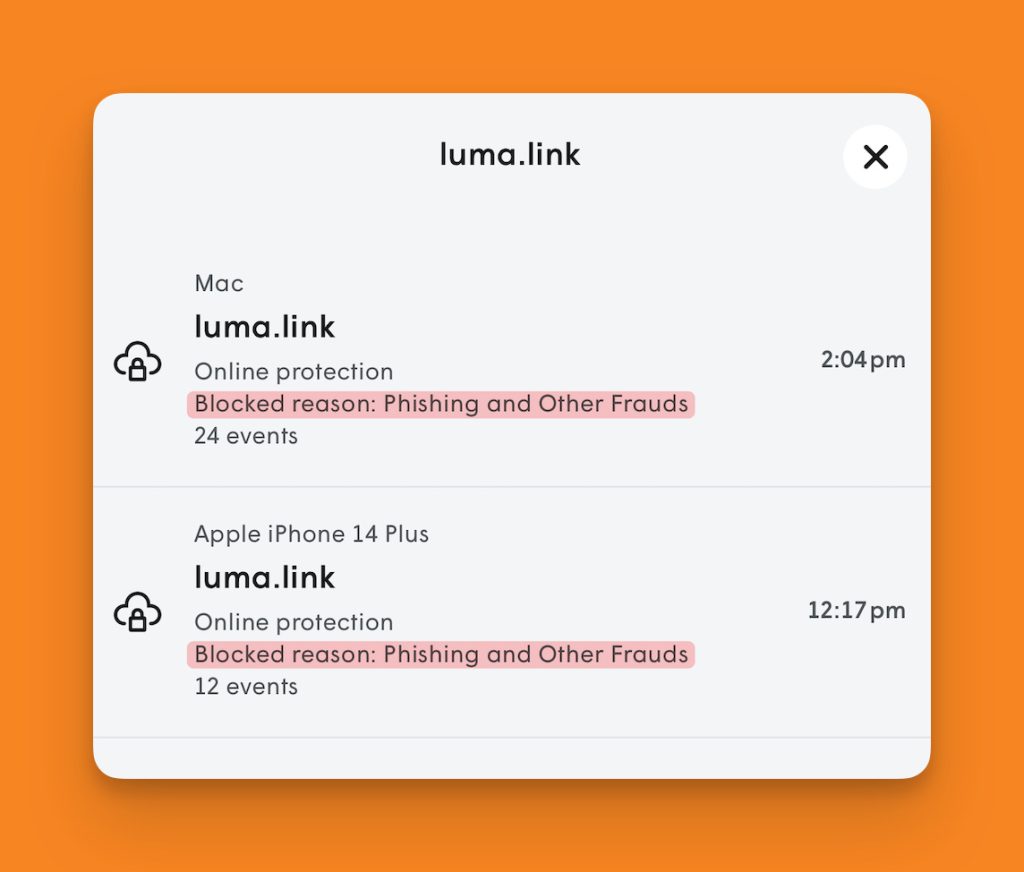
I use Luma to manage our weekly Escape Pod Zoom calls. Recently, me and some other people have had problems with some of the links in their reminder emails. We’d click, and the page would time out.
Turns out Luma recently switched their short links from o.lu.ma to luma.link, and my wireless router software (Plume) started blocking this new short link, and I didn’t even know!
After a few emails back and forth with Luma, they got me looking in the right direction and it’s fixed, so major high fives to them! I’ve been using Luma since I started hosting my own Zoom calls back in 2023, and I think they’re fantastic.
I hosted two “Let’s Break Up 💔 With Gmail” calls last week, and one guest mentioned this as we were wrapping up on Friday:
“This was very helpful if for no other reason than just to know I’m not the only nut in the room.”
It’s such a relief knowing other people are facing the same challenges. That we’re not alone.
Because, at the end of the day, it’s not just about email, but also the lock-in with Google Calendar, collaborative docs, and photo management. This makes a move look harder to manage, and so then we never start.
And we landed on two big points:
- The replacement will never feel “perfect” because Gmail feels so familiar – some of us were beta-users of Gmail back in early 2004!
- Do we want to replace one “all in one” soultion with another? What will some of these companies look like in ten years?
A good place to start? Stop researching and just sign up for a free trial with another email provider like Fastmail or Proton (affiliate links) or Hey. Get a feel for them, because if the vibes are off, you’ll never switch over.
Start small. Switch something like your Netflix account first, then maybe a store account. There’s no need for a big announcement, to tell everybody about your move. Just update your email here and there as you migrate, and leave the critical accounts (like banking, work stuff) for later on.
Kate Ellen talked to us about using a Light Phone. It can’t stream music, and adding your own is clunky. Sometimes friction can lead to real life possibilities:
“I just have been listening to the radio in my car. And the interesting outcome to that is that I’ve gotten to know the local radio stations in my town who are super supportive of local musicians. And through that… now I’m at the point where I’m getting booked for a show, and I’m like, okay, now I have the confidence to actually call this radio station so that I can go on the radio station and promote my music. Which, if I was just listening to Spotify… I just wouldn’t even have had the context of understanding my community.”
An artist can thrive locally; I know several who’ve stepped off the social media hamster wheel and are doing just fine.
When we stop making the phone the central part of our day we begin to realize that the real life possibilities never went away, we just stopped looking for them.
You’re tired of social media, but wondering if there’s life after the newsfeed. That’s exactly what we figure out here – together. 🏳️🌈🏳️⚧️
→ See our upcoming Zoom schedule
Say hello. Ask about working together. Tell me how you’re doing: seth@socialmediaescape.club
Subscribe via RSS