
Category: Social MediaCategory: Social Media
I saw Substack’s latest post, Demystifying the Feed, and figured I’d rant about it on a Substack Live!
Here’s some of the stuff I covered:
- The lottery effect: I compared Notes (and social media in general) to a lottery—someone wins big to keep the rest of us playing, but most people don’t.
- Algorithms ≠ strategy: I talked about how algorithmic feeds will always disappoint. You can’t game them, and they don’t owe us growth.
- Don’t outsource your audience: I reminded everyone that Substack is useful, but temporary. Platforms crash, change, or ghost. An email list is portable and ours forever.
- Real-world examples: I shared a story about a musician who skipped social media promo, reached out to a local newspaper and radio station, and played to 150 people in a new town—plus 30 new email signups on a clipboard. You can read that post here.
- Offline matters: I talked about how flyers, zines, and conversations still work. My own punk rock flea market table proved it—people still want to connect in person.
- Community ≠ platform: I said Substack makes great tools, but the “community” belongs to them, not us. Real community happens off-platform.
- For quieter creatives: I encouraged folks to stay authentic—slow growth, not performance. I’d rather grow as myself than pretend to be louder or slicker than I am.
- Blog and email > Notes: I emphasized that everything I post on Notes should also live on my own site.
- Let unsubscribes go: I reminded everyone to stop watching unsubscribe counts. I don’t track them either, it’s better to just focus on who stays.
- Final takeaway: The way I “demystify the feed” is by not relying on it. I’d rather build small circles, reach people directly, and keep the internet human-sized.

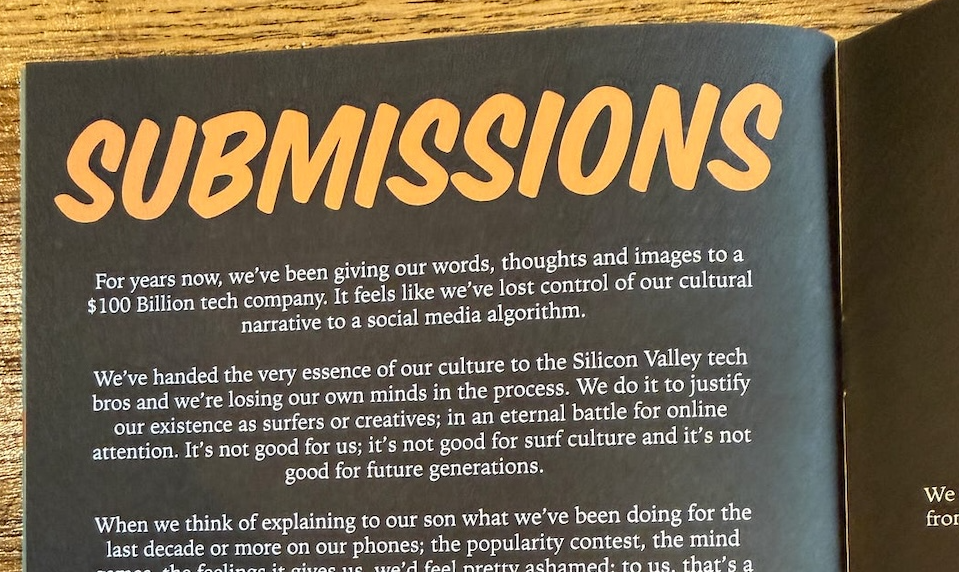
Yonder Surf Zine sums it up pretty well (get a copy here):
“For years now, we’ve been giving our words, thoughts and images to a $100 Billion tech company. It feels like we’ve lost control of our cultural narrative to a social media algorithm.
We’ve handed the very essence of our culture to the Silicon Valley tech bros and we’re losing our own minds in the process. We do it to justify our existence as surfers or creatives; in an eternal battle for online attention. It’s not good for us; it’s not good for surf culture and it’s not good for future generations.”
Why don’t people visit websites anymore? Because we put all our best work on someone else’s website, namely Facebook, Twitter, Instagram, Threads, YouTubeetc.
If we put all our best work on these various platforms that we don’t control, what incentive is there to visit our websites?
And remember – these platforms monetize our work. We are the product, the never ending feed of text and images and videos and hot takes. These companies cram all this “content” into a feed, throw in advertisements, and make money.
Guitarist Steve Vai knew this years ago, saying (as the artist) “I get paid the most.”
(Yonder link via Looking Sideways)
Sam Altman is building a technology that will cure cancer, but it couldn’t help him write a Tweet more interesting than most tech-influencers.
As Manuel Moreale says in his post, “Look, another AI browser,”
“The thing I found more interesting about the whole OpenAI announcement was Sam Altman tweeting: “10 am livestream today to launch a new product I’m quite excited about!.” This is coming from someone who’s allegedly running a company that’s building a tool that should usher in a new era where computers will replace most of human work, where we’ll all have a super intelligence always available in our pockets, ready to dispense infinite wisdom.”
Releasing a new song and then Tweeting, “new song” is void of context. It’s boring, bland, a race to the bottom. Sam Altman can’t seem to figure out how to write a better pitch, but I bet you can.
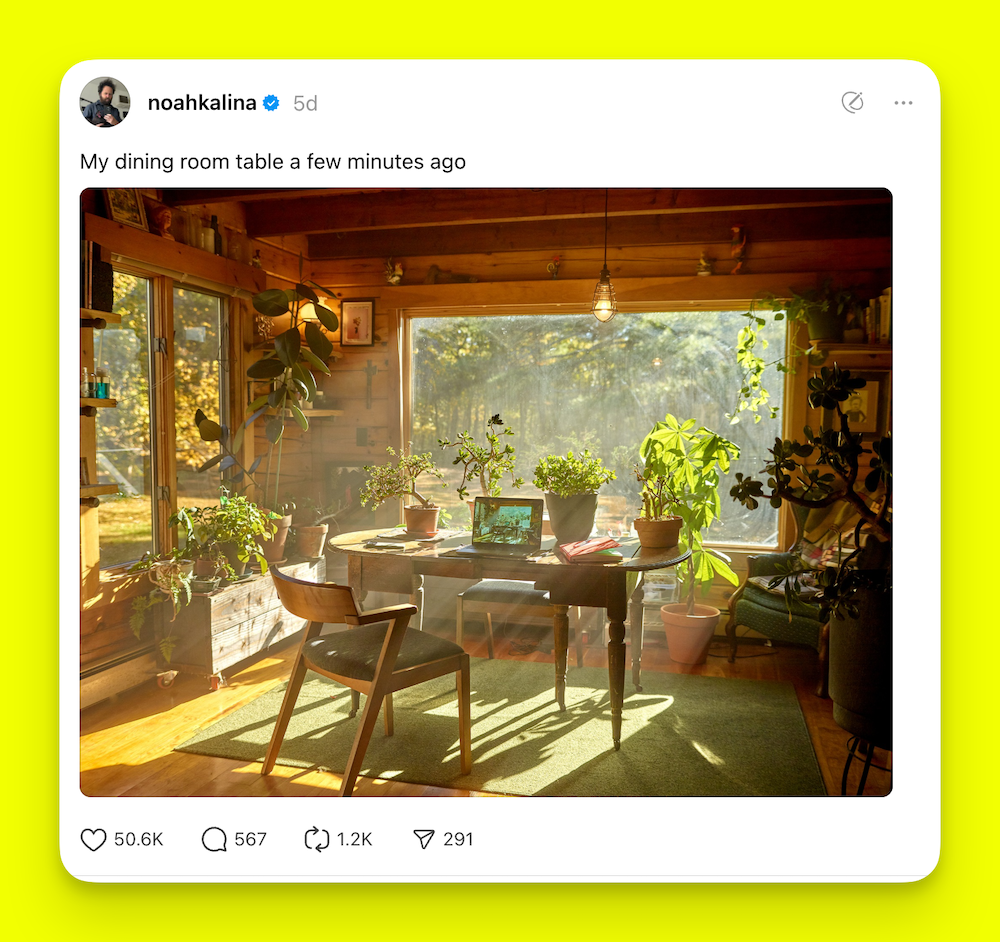
Photographer Noah Kalina posted a photo on Instagram’s Threads, which found favor with the algorithm and shown to a wider audience.
This led to “context collapse,” as most of that wider audience don’t know the work of Noah Kalina, so people assumed the image was made by AI, and that Noah was a bot.
I said “the big lesson here: don’t post anything ever,” in the YouTube comments, to which Noah replied, “the coolest people I know have zero internet presence.”
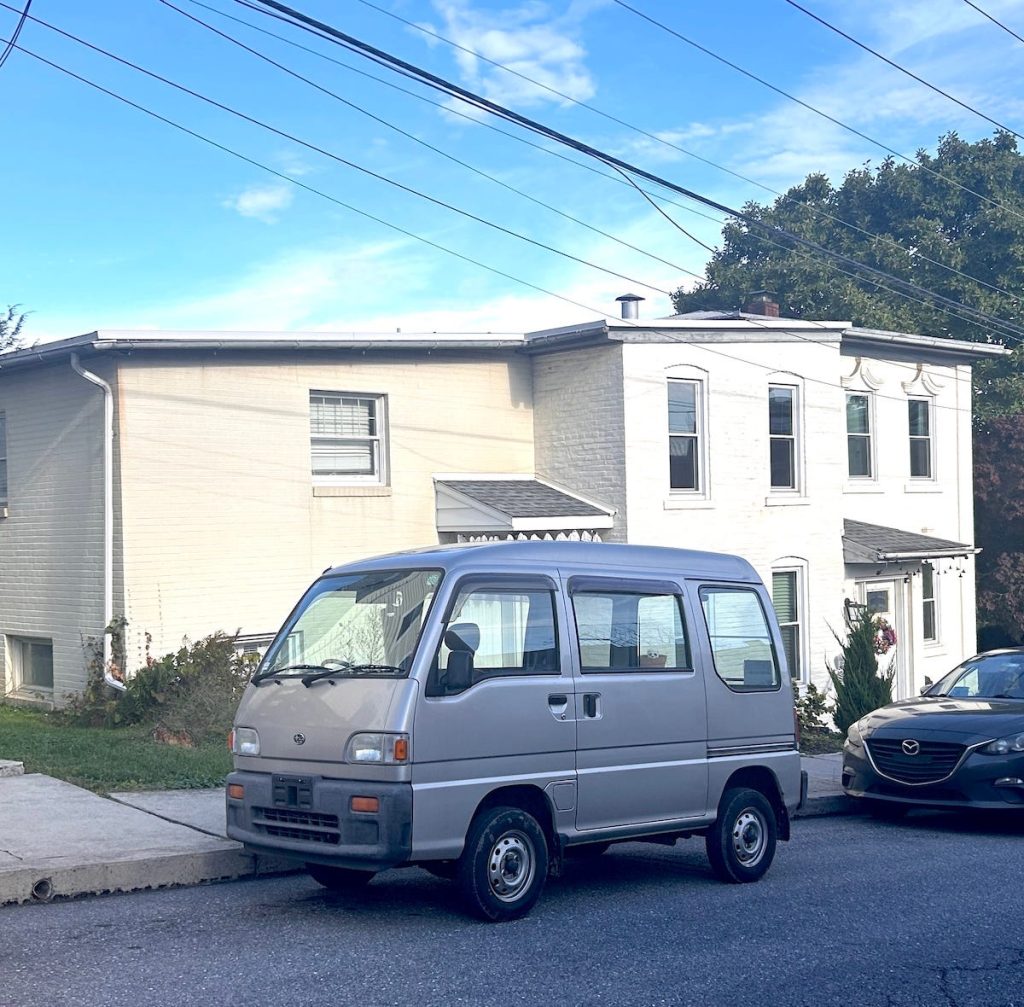
I donated some bikes to the CAT Bicycle Cooperative last weekend. The space was a bee-hive of activity, buzzing with volunteers and folks hanging out.
I visited a new store front in town because I’ve been talking with the owner over the years, and I bought some delicious cookies and coffee, and might be helping them set up an email announcement list.
This is just a span of a few days, and the result of IRL conversations and interactions, limited only by geography and time.
The best networking is just being a part of community. This doesn’t mean you need to join every group or sign up to volunteer every weekend, but find folks and orgs that you vibe with and say hello on occasion.
As I’ve said recently, “the more I think about Social Media Escape Club, the more I realize it’s all about the personal connections. It’s not just about the conversations, the encouragement, the support, the regular check ins, but the depth of those interactions.”
Like, I’ve been following Cody Cook-Parrott for awhile, since their posts about leaving Instagram a few years back. They were a big inspiration for me for leaning into the work I’m doing here!
So I reached out sometime in late 2024 and asked if they’d be up for a short Zoom chat about email segments, and they said yes – you can watch the video here! Also, check out their Reclaim the Archive, a fundraiser workshop for Cody’s books.
“This workshop is about reclaiming and re-animating your own archive — as an artist, writer, or small business owner.”
Rad!
So, reach out. Connect. Strike up a conversation. Send that email. As Carly Valancy says, “your future self is begging you to reach out.”
“While reaching out I found myself. I found my voice. I had the beautiful epiphany we all hope to have at some point, which is that you are responsible for your life. You are responsible for your decisions and opportunities and to a large extent, your luck. Reaching out instilled the belief in me that literally anything could happen if you connect with the right person.”
Social media wants us working alone, isolated, cut off from real support, trusting only the algorithm, buying another lottery ticket and hoping the next post get 13 likes.
Or, as Seth Godin says, we can seek out the others.
“Our best work is far more likely to happen when we have peers. You’re likely to become the average of the people you spend professional time, so choosing your cohort is best not left to chance.
There’s no map for this, no step by step guide, and that’s why it’s so important to start now.
You’re tired of social media, but wondering if there’s life after the newsfeed. That’s exactly what we figure out here – together. 🏳️🌈🏳️⚧️
→ See our upcoming Zoom schedule
Say hello. Ask about working together. Tell me how you’re doing: seth@socialmediaescape.club
Subscribe via RSS