
Category: sethwCategory: sethw

◼️ This Monday newsletter is sponsored by dumb wireless, the place to get the Punkt MP02, the Unihertz Jelly Star, the Wisephone II, and more. Use code minimalnewyear for a special discount.
Social media got us hooked on the likes. The “engagement.”
As users leave, they’ll be less engagement, which could speed the exodus of creative folks on the existing platforms.
So, how will Meta fix this?
“Meta says that it will be aiming to have Facebook filled with AI-generated characters to drive up engagement on its platform, as part of its broader rollout of AI products, the Financial Times reports. The AI characters will be created by users through Meta’s AI studio, with the idea being that you can interact with them almost like you would with a real human on the website.”
This is great news if you can pay your rent with likes. But for the rest of us, “AI-generated characters” won’t be buying our offerings.
They might visit your site, or leave a two word reply, but they’re not buying a ticket to your next show, or attending your gallery opening.
“The latest AI spin from Meta sounds like more of the same: a mix of vague hype, dubious business models, and a baffling sense of what people really want from a social media network.”
This is why we need to get back to talking. Being actual humans.
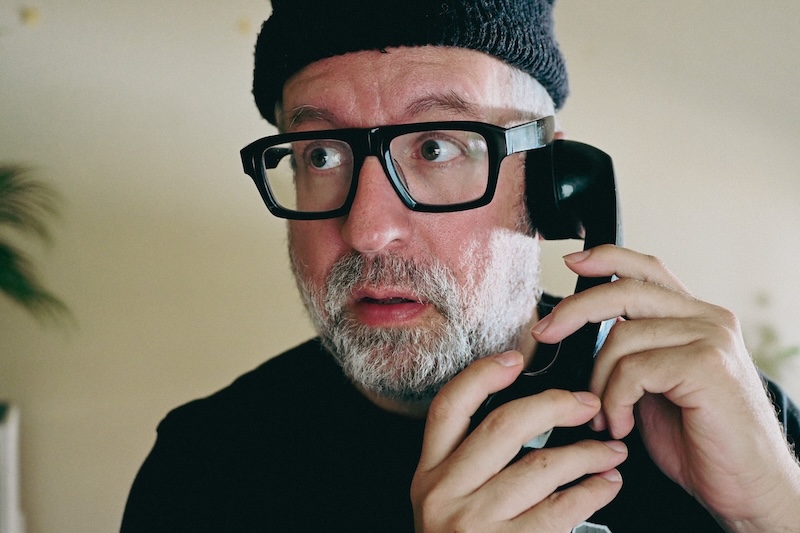
If I called you right now, could you tell me what you do? Or would you put it to voicemail and avoid the interaction?
Can you talk about your work without fumbling over your words (well I, ummm….), or apologizing (I kinda make this music, like… sometimes…)?
What do you say when a friend asks?
When an art director emails you?
Would you accept an invite to go on a podcast to talk about your work?Getting better at talking about the real work you do, in the real world, with real people will get you further than some new trendy marketing hack.
Get good at making small talk at social gatherings, and finding the fellow weirdos that are just as awkward as we are (and would rather be home drawing, or writing music).
Try this: make a five minute video or voice note, talking about your work.
The “greats” are great at talking about their work because they’ve been talking about their work for years. I’ve gotten better at this (not great, by any means) because I’ve talked to a lot of people about my work over the last six months (like Claire Venus and Sarah Fay).
That was a lot of Zoom calls, and saying yes to doing interviews and phone calls.
So be bad at it now, and make that five minute clip. No one has to see it. You can even delete it when you’re done.
Maybe script it word for word. Or make notes on index cards. Make five videos. Make an voice note when sitting in your car outside of work. Meet with a friend and practice with them.
Do this now when the stakes are low, so when you do catch a break, and someone asks you to be on their podcast, or join their Zoom call group, or meet for coffee, you’ll feel a little bit more confident.
It’s almost 2025, baby! Speak the creative universe you want to inhabit into existence! Manifest!
After all, we live in a world where “AI-generated characters” exist “to drive up engagement,” so like, maybe we can do whatever we want.
◼️ I’m going to do a mini-workshop in early 2025 about ABOUT pages and talking about our work, handy for Substack and your own (gasp) website! Click here to add your name to the wait list and you’ll be the first to know when it launches.
◼️ Next Escape Pod Zoom call is Thursday, January 2, 2025 at 2pm EST – click here to RSVP.
//SETH
◼️ P.S.Ditch Gmail and switch to Fastmail: get a free 30-day trial and 10% off your first year here (affiliate link).

◼️ Today’s newsletter is sponsored by dumb wireless, the best place to get a great phone without all the noisy distractions. Use code minimalnewyear for a special discount.
Hi. The photo above is from a recent trip to NYC, where I lived from 2004-2010. It’s where I left my last full time job in 2006, and I’ve been figuring it out ever since. I guess I could say I’ve been “building my business,” but really it’s more like I’m crossing a busy stream by jumping from rock to rock, and I made it another year. One step at a time, friends.
Today’s “FOUR THE WEEKEND” is pretty lightweight, perfect for the hazy time between Christmas and New Years.
Remember – you don’t need to reinvent yourself, or fix anything over the next few days. You’re great just the way you are.
1. VALENTINE’S DAY IS 50 DAYS AWAY
Maybe plan something fun for Feb 14, 2025? I dare you!
Release a new single, a photo zine devoted to love and heartbreak, maybe a new shirt design, or a funny video serious you could roll out that entire week. Maybe it’s a collaborative post about breakups with some of your readers, or a collection of poetry from several other writers in your circle.
Okay, if not Valentine’s Day, what’s another holiday you could release something around that might be a little more “on brand” for you?
2. SIGN UP FOR MY ABOUT PAGE WORKSHOP
Lots of you downloaded my ABOUT PAGE PDF in a previous email, so I’m going to do a mini-workshop in early 2025. Click here to add your name to the wait list and you’ll be the first to know when it launches.
‘Write Your Artist Bio in 6 Sentences’ over at Dedicate Your Life To Music is a good place to start even if you’re not a musician.
3. GET AWARENESS OFF YOUR PLATE
This is what I tell anyone who can’t fathom being without social media; seek out opportunities to work with other people, do interviews, show up on podcasts, collaborate on projects.
Check out these two post below (loaded with examples and ideas) and envision you world with less social media.
https://socialmediaescapeclub.substack.com/p/lets-rethink-how-we-do-awareness
https://socialmediaescapeclub.substack.com/p/getting-awareness-off-my-plate-is
Which podcast would be a perfect fit for you to guest on? If you could get an interview with any media outlet to talk about you work, who would it be?
4. MAKE A LIST OF PEOPLE YOU COULD PARTNER WITH IN 2025
This one is from
Ana Calin (see her post here), and is closely related to the idea of getting awareness off your plate.
Make a list of 20-30 people you could partner with in 2025.
These partners should be influential figures with a complementary service to yours and a similar target audience.
By partnering with them you can send referrals, co-market and even launch joint ventures.
It’s a fantastic way to grow.
Get out a piece of paper or make a new note on your phone and think about getting away from doing everything yourself, and figure out the people in your orbit that might be open to creative expansion.
For me that looks like people I could interview for this newsletter, guests I could invite to our Escape Pod Zoom calls, and smart people who could co-lead a workshop.
Who are some people you could work with that’d help you get deeper into your work? Who are the people you could grow with?
Have a great weekend, everyone. See you all again on Monday.
//SETH
◼️ This post is sponsored by dumb wireless, the best place to get a great phone without all the noisy distractions. Use code minimalnewyear for a special discount.
This one is from Ana Calin (see her post here), and is closely related to the idea of getting awareness off your plate.
Make a list of 20-30 people you could partner with in 2025.
These partners should be influential figures with a complementary service to yours and a similar target audience.
By partnering with them you can send referrals, co-market and even launch joint ventures.
It’s a fantastic way to grow.
Get out a piece of paper or make a new note on your phone and think about getting away from doing everything yourself, and figure out the people in your orbit that might be open to creative expansion.
For me that looks like people I could interview for this newsletter, guests I could invite to our Escape Pod Zoom calls, and smart people who could co-lead a workshop.
Who are some people you could work with that’d help you get deeper into your work? Who are the people you could grow with?

◼️ Happy Monday, friends. Today’s newsletter is sponsored by dumb wireless. Use code minimalnewyear for a special discount on flip phones, minimal phones, and even the Camp Snap Camera (a screen free digital camera).
This is my first Christmas without my dad, but I’ve got the camera he used to take family photos here with me (along with like 10 rolls of film I need to develop).

We didn’t have much of a relationship in the last few years, so I’m not really “sad,” but like all family stuff it’s complicated.
I lost my mom in 2017, too. I think about her a lot, and how much she enjoyed this time of year. She loved the Christmas lights, and Emmet Otter’s Jug-Band Christmas and baking cookies.
Dad, well, he was along for the ride. He just wanted to play his guitar. To his bull-headed credit, that’s what he did until he died alone in trailer that smelled of cigarettes and booze.
This is a reminder that when the lights go out, all in all is all we are.
Your entire life summed up by the people who might be by your side when you pass into the void.
That’s what will make you cry with something like joy or contentment on your deathbed: that you’ve helped people, been good to them, even strangers. That’s it.
It’s not the number of trips you take, not your bank account, not the number of friends or followers or subscribers or fans, not even your family, not your weight or the color of your hair. It’s that you’ve been good to the people all around you.
That’s from ‘What Will Really Matter on Your Deathbed’ by Sarah Fay, who lost her mother in the last few days.
You’ve got magic, your art, something to share, so make sure you share it with a world in need.
Oh, and make sure to be a good person to the people all around you at the same time.
The less rigid we make things, the more magic we can experience. I wrote about my dad’s rigid thinking of what it meant to be a musician.
Dad’s idea of “success” was having a group so he could get booked at local venues. Without that, life seemed not… worth living.
And yet, his neighbors loved hearing the music he played.
Our gifts are not transactions, but they need to exist in the world in whatever form they can take.
Instead we let algorithms and worldly definitions of success hinder our work, draining our creative energies and robbing the world of our magic.
Just because you can’t play to a sold out Madison Square Garden doesn’t mean you should stop making music.
The “likes” can’t determine our value, and the subscriber count goals change the minute we hit them.
I think about the musician who believes their work doesn’t matter because a recent post got five likes.
I think about talented artists that are waiting for permission to show their work in the “proper” spaces when there are thousands of people right outside their door who are looking for a bit of magic during their commute.
The writers waiting to be picked, deemed worthy to have their words printed and bound and placed next to a million other books, when words can live on park benches and poetry on the sides of non-working telephones booths.
Stability is not owed for these artistic efforts, but the world is a better place because of their existence. Though not everyone gets to earn a living from their art, everyone lives in a world that needs more of it.
It’s a cruel reality, that such talent and gifts can be ignored by so many, but we live with this and make our work anyways.
Because even in the grand scheme of things, most people have never heard of our heroes. There are so many people who’ve never heard of Austin Kleon or Kim Deal, and they’re huge.
Find freedom in that. Explore everything you can in your supposed obscurity. It’s time to do whatever we want.
Let’s stop waiting for the next publication or platform to save us. The fix isn’t waiting for tech bros to share a tenth of a penny more in streaming payouts – the power is with people reading newsletters and creating websites.
Let’s be the media outlets, the tastemakers, the movers of culture.
- Start that in-person book club.
- Go on photo walks with friends.
- Visit your friend’s studio and make a zine.
- Work with friends and put out a recipes zine.
- Make a music video with your friend on Christmas.
We don’t need to wait for permission, to get booked, to get signed – we release our work today with the people already in our lives.

My dad moved to Florida, so I didn’t see him much (I’m in Pennsylvania).
My sister flew down from Delaware with her kids to go to Disney. She told dad about this trip, and offered to pay for his ticket. You know, to see her and the grandkids.
Dad needed to drive just 45 minutes, but he didn’t meet up with them because he “didn’t want to pay the $20 for parking.”
This happened two years in a row.
So my sister is starting a new tradition in honor of a parent who couldn’t show up for his kids: tip $20 to someone on my dad’s birthday, December 24th. Cash preferred.
Happy Holidays. Stay safe, tip well.
◼️ P.S.Ditch Gmail and switch to Fastmail: get a free 30-day trial and 10% off your first year here (affiliate link).
We have people right in front of us – digitally, and in real life. On our existing email list. In Zoom rooms, and Discords.
Imagine if we spent our time and energy on them, instead of spinning our wheels on social media trying to impress everyone and no one?




You’re tired of social media, but wondering if there’s life after the newsfeed. That’s exactly what we figure out here – together. 🏳️🌈🏳️⚧️
→ See our upcoming Zoom schedule
Say hello. Ask about working together. Tell me how you’re doing: seth@socialmediaescape.club
Subscribe via RSS