• Published On: June 10, 2024Categories: Social Media, Websites, Work

    Computer-generated “art” is a race to the bottom, and I’m glad we’ve opted out.

    Our job is to make what we make with the care of a human mind, drawing upon our experience and talent and passion. Every artist has their own reason, of course.

    The consumer has their reasons, too.

    Some want the cheapest, so there’s plenty of places to find art made for the everyone, the largest swath of consumers, the safest items you can put in a dentist waiting room, or your kitchen and it won’t upset the inlaws.

    Some want the most expensive, the collectors’ pieces, the status that comes with owning a first edition, a rare piece.

    Some folks, and I think this is mostly who we serve, care not just about the design but the designer behind it. The art, and the artist who made it. The music, and musician who made the music. The writer who created a whole new world.

    It’s a dance to find these people and for them to find you, but it’s a dance worth learning, refining, practicing, and enduring.

    It’s not an easy dance, and it’s not a dance where you’re sure to win in the end, but it’s probably the dance we should all be doing because otherwise what’s the point of living?

    Social media told us that we’d reach all these people, and for a moment in time, this was true. Every casino has to pay out, or else no one would visit and play. The possibility that we might win keeps us coming back.

    But when the casinos puts multiple obstacles in your way before you even get into the building, it’s time to find another game to play.

    Is there one answer, one silver bullet, one new app that will return things to normal? No, never. I believe that “centralized kingdoms of power and influence aren’t the answer.”

    There’s no one app, service, or medium that will save us all, but we can make this work together (because we’ve been doing it long before the techbros showed up).

    Call your friends, book a DIY show, start a flea market, gather some freaks on Zoom or Discord, re-build our scenes from the ground up.

    We’re not going back to how it was, we’re building it better.

    My friend reminded me how we used to show up at friend’s houses unannounced and crash on couches after a long night of conversation.

    Sure, as some of us approach our 50s we’re not gonna do that again, but what’s the new version of that?

    What’s the 2024 version of hanging out at the 24 hour diner in town?

    You’ve seen people making print zines, right?

    Working on websites again and sending newsletters like it’s 2002.

    House shows. Thumb drive clubs. Snail mail.

    We’re getting back to the simple things with subtle variations, all in our own unique and artistic ways.

  • Published On: June 3, 2024Categories: Newsletters, Social Media

    I should find more views like this and watch fewer Adam Mosseri videos.

    The head of Instagram was explaining why they’re not adding links to post (I removed the video). My friend Dino Corvino is right; who cares?

    Instagram and Meta are big corporations doing whatever they want to increase shareholder value. Your local ISP, Netflix and every other service we use (including Substack) will do the same.

    My answer? Control what I can control.

    I saw too many emails from LinkedIn and scrolled through too many “ways to save the music industry” mega posts than I can put up with.

    So, I deleted LinkedIn.

    I deleted Twitter last summer.

    I deleted Instagram on the first day of 2024.

    They’re no longer an option. To make things work, I need to operate within those parameters.


    Sometimes, I feel like I need to be up to date with everything happening on social media—the algorithm changes, the new policies, the latest blunders.

    But none of that helps you write a better newsletter or figure out how to get new subscribers, so here are some ideas I’ve been batting around this week.

    1. Be yourself, be consistent, and you’ll find your people. You don’t need to become better or more marketable – you need to be exactly who you are so that people on the same operational frequency can find you. Like Mehret Biruk wrote, “when you put on a mask, you attract the wrong kind of people because they are attracted to the mask and not the you behind the mask.”
    2. Do it how you want. You don’t need to start a podcast. You don’t need to make videos. You don’t need to sign up for the hot new app. Like David Speed wrote recently in ‘I’m Saying BYE to 100K Instagram Followers,’ “are we going to keep compromising ourselves to cater for an ever-decreasing attention span?”
    3. Go back to what worked. Okay, social media aside, what else worked? Nic Peterson asks, “can you do it again, remove the parts you didn’t like and double down on the parts you did?” Get away from always having to do the hot new thing, and refine your previous efforts (h/t to Scott Perry).
    4. Get with people. You can do this virtually or like Jaime Derringer (who founded Design Milk) says, “find an offline way to engage with your community through events, conferences, local meetups, and other non-social media engagements.” This moves beyond what we’ve been doing for so long – shouting our message on social media in hope that someone might hear it. It’s time to get more intentional.
    5. Slow down. Step away from the online machine and watch what happens. Life goes on. We’re all busy, going about our lives. Post a dozen times a day on social media. Send an email three times a week. Make videos. Start a podcast. What does your art, your business, and your life look like if you slow it all down?

    All of the above goes beyond open rates, ideal sending times, and promotions folders shenanigans.

    This is about connection in its most basic form.

    An email to an art gallery or booking agent, a phone call with an old co-worker, a video call with disgruntled creative folks looking for ways to exist without social media.

    All things that the big corps can’t interfere with.

    I wrote earlier this year, “Maybe centralized kingdoms of power and influence aren’t the answer.” Stop playing games you don’t want to play, befriend people doing the work you admire, and ascend to a whole new level beyond the social media rat race.

  • Published On: May 27, 2024Categories: Social Media

    I’ve climbed over 17,000’ since April 19th. This is in preparation for a half-marathon that I’m running in 12 days.

    What the hell does this have to do with the Social Media Escape Club?

    It’s practice.

    It’s why I’m not telling you to delete your social media accounts today.

    If you want to live a life without social media stealing hours of your day, start by deleting the app(s) from your phone.

    That’s practice (you can reinstall them later if needed).

    Try logging out of the accounts on your computer.

    Practice (I logged out of LinkedIn today).

    Turn off your phone, as Cody Cook-Parrott writes about in ‘Hope and Flowers’:

    I know that my ability to earn is directly related to my ability to rest. Not just rest but to turn off the phone, to communicate with less people, and have less screen time. To read, to write, to really be without the phone. To turn the phone off. How many times can I type – phone off. Phone off. No phone. The phone is off. When was the last time you turned your phone off?

    NOTE: there’s no need to reply and tell me you can’t do so because you’re caring for someone or you’re waiting for an important call from your doctor—I get it.

    Experience being unavailable.

    How does it feel when no one can reach you? Maybe journal those feelings. Record some audio of your experience, or a video. You don’t need to share it, but come back to it in a week and reflect.

    As you live your life away from social media an hour at a time, you’ll discover that things don’t usually crumble. You don’t disappear.

    As you practice being away from social media, you might miss something, so adjust accordingly. If a friend usually DMs you, tell them you’re taking a break tomorrow, and you can be reached via email or text.

    If they resist, focus on those who respect your decision not to use services that negatively impact your mental health (I’ve absolutely done this).

    Some things you can do in an hour instead of using social media:

    1. Go for a long walk, bike ride, or sit next to a lake
    2. Share a meal with a friend
    3. Read a book or a magazine
    4. Send a nice email to someone whose work you admire
    5. Call a friend and discuss art, movies, breakfast recipes, etc.
    6. Contact someone in your field about working together on a project
    7. Stare into space, the void, the darkness of time

    One of my favorite things to do is take the photos, witty remarks, and hot takes that I used to post on social media and send them to a few friends instead or turn them into a blog post.

    The spontaneous bits you’d post on social media can be the source material for your next newsletter, text to a pal, Discord group, or next live Zoom hangout with good people.

    Like Professor Pizza of Axe Slasher said in one of our ESCAPE POD hangouts, “why should I give my best material to Twitter?”

  • Published On: May 20, 2024Categories: Social Media

    Is it beyond comprehension that people at social media companies think of ways to make us dependent on their services? Could they actively be building a narrative that your participation is necessary?

    First, consider the bait and switch: They got all of us to set up our profile pages for free and rewarded us with tons of views and likes. Eventually, we abandoned our websites, blogs, and email lists, and then they throttled our reach unless we paid to boost our posts or spent more time on their platform, uploading an un-ending stream of “content.”

    Second, even if you don’t use their platforms to promote anything, you likely fell for the DM functionality to keep in touch with friends and family. But what if you get locked out of your account? What if your friend gets their account suspended for some random reason? What happens when one of your parents gets scammed and can’t log in?

    If you lose touch with people you care about, you’ll figure out how to reestablish the connection quickly, usually by phone, text, or email—three pre-installed apps on every smartphone.

    Remember – many people are paid well to keep you locked into their ecosystem. Escaping the world of social media ain’t easy, but that’s what Social Media Escape Club is here for.

  • Published On: May 14, 2024Categories: Newsletters, Social Media

    I ran 1,105 miles in 2020, which took me around 200 hours.

    Scrolling 33 minutes daily on your phone adds up to about 200 hours a year, too.

    A friend told me recently that they want to start a newsletter, but they don’t want it to become a large time investment.

    I told them that their next newsletter “is already written.”

    Re-purposing the content you’ve already posted (on social media) means less time thinking about your next email newsletter, and gives you a jump on the creative process.

    Once you have everything copied and pasted into your newsletter, you can make expand on some of your ideas, or include some other photos that you didn’t share on socials.

    Most of us thought nothing of posting daily to social media, sometimes multiple times per day or per hour when an awards show was on or during a major sporting event.

    Most of us have years of archival material to draw from, all tucked away in our social media channels.

    Your posts only reach a fraction of your followers. Probably 90% of them never saw any of this material in the first place, so don’t feel bad about re-using your own material – it’s your material!

    What could you do with just 30 minutes per day that might benefit you a year from now?

    • Learn how to make scenic videos of lakes using a digital camera, Zoom H6 audio recorder, and editing the whole thing in DaVinci Resolve.
    • Learning a new technique related to your craft
    • Journaling and meditating
    • Going for a walk, a bike ride, or go scootering (thanks, Amy Walsh)
    • Dancing to your favorite records (R.I.P. mom)
    • We think nothing of spending an hour a day on work meetings – what if we spent 30 minutes a day on FRIEND MEETINGS?
    • Start a daily 30-minute check-in video call to help everyone stay on track and encourage one another

    Sometimes, these things sound like too much, but each day, we have choices: invest in ourselves or create shareholder value for corporate behemoths.

    Consider that we don’t think twice about uploading our original photos and text to a platform that sells advertising around our unpaid labor while limiting the number of our friends (or potential clients) who will ever see it, thus incentivizing us to either spend more of our time (a finite resource) on the platform “engaging,” or spending actual money to “boost” our posts so more people might see it.

  • Published On: May 9, 2024Categories: Newsletters

    There are three places to start when writing a newsletter.

    1. Sharing

    A link you shared with a friend can be your next newsletter. It might be topical, about a recent event or a new idea.

    You could also dig through the archives on your blog or newsletter or your social media profile and re-share links that meant something a year ago or 10 years ago, like this blog post I wrote a decade ago:

    “Every one to one interaction is priceless. It’s valuable. It can’t be outsourced, and you can’t just get some unpaid college intern to do it.”

    Remember – something you shared 18 months ago was probably seen by just 8% of your followers – and you’ve probably gained more subscribers over the last year and a half!

    2. Storytelling

    We’ve all got stories, some big, some small.

    I was taking some photos around town a few days ago, and the owner of the barbershop yelled, “come take our photo!”

    Now, that doesn’t happen very often, but it made for a fun story!

    Here’s some other stories I haven’t told yet:

    • That time I invited by highschool buddy to NYC to hangout when I had the Deftones come to our studio for an interview.
    • How I ditched all my belongings in 2010 and left Brooklyn with my bike and my laptop and rode to Rutherford, NJ to start my nomadic bike nerd journey and ended up in Albuquerque, New Mexico.
    • When a manager for a big Grammy Nominated band told me they had a problem with my interviewer minutes before we were supposed to go live on a podcast.

    You’ve probably got stories, and your subscribers would probably love to hear them.

    3. Showing

    This is the default, the starting point, the simplest thing to write about in your newsletter, but you have to do it in a way that feels right.

    In last week’s ‘Social Media Support for Artists’ (hosted by the wonderful Beth Spencer), someone spoke about taking photos of her sketchbooks and then dreading the idea of posting them to social media and writing captions for each.

    Someone suggested, “Make it a video!” And for this person, that resonated.

    If you dread doing something, you’re probably not gonna do it. And if you do it reluctantly, everyone is gonna know you’re being pissy about it. The vibes will be off, my friend.

    Here are two examples of sharing and keeping the good vibes:

    Do I dread running? Well, I love eating pizza a lot more, that’s for sure.

    But I do love being outside. So running gets me outside, into the space I love. And then I love sharing photos and videos from being outside, way more than making “infographics” or whatever to try to promote my work.

    By sharing a glimpse of what I love, it shows a bit of who I am, and maybe that resonates with a few people.

    Getting off social media has to be more than just “yeah, but how will I still sell stuff?” It’s about the time you regain, which allows you to explore, learn, and grow.

    So don’t get sad about writing a newsletter, thinking you’ve got nothing to write to your subscribers—you’ve got plenty to write about, share, and explore with the people who’ve signed up and said, “Yes, I want more of what you have.”

    You are more interesting than storage lockers, and that show has been on air longer than Seinfeld.

  • Published On: April 29, 2024Categories: Marketing

    I wrote about Mullet Marketing about a year ago, and if you’re guilty of it, you’re depriving your most engaged fans of your best work.

    Let me explain.

    The mullet can be described as “business up front, party in the back.”

    PARTY IN THE BACK: This is most everyone’s social media feed, where you see live photos from events, gallery openings, and shows. Also, photos of dogs, record shops, and your workspace. It’s videos, 300-word captions, and where we voice support for various organizations and causes.

    BUSINESS UP FRONT: This is most everyone’s email list, where we get static images of products, mock ups, poster art with teeny tiny text, details, facts, locations, prices, deals, and colorful buttons labeled BUY NOW or SHOP HERE.

    This is why we cringe when our favorite artists say, “Sign up for updates,” or “Join my newsletter!”

    We’ve all signed up for enough newsletters to know that most of them suck.

    So here’s an idea – make a newsletter that doesn’t suck.

    Wild concept, I know.

    You wouldn’t share a stock photo on social media, so why use one in your newsletter? Re-use the photos you’ve already put on socials!

    And what is the best part about writing a paragraph about your latest project in a newsletter? More than 10% of your audience will actually read it!

    You gain a certain amount of energy when you know your creative output is actually being seen, and that energy is exactly what you need to continue producing your best work.

  • Published On: April 22, 2024Categories: Email Marketing, Social Media

    In a recent newsletter titled “Backstage” (which went out to 10,000+ email subscribers) Tegan from Tegan and Sara wrote about putting out a live album. Maybe release it on vinyl, CD, and cassette, “with a booklet with photos from the tour.”

    Then goes on to say:

    “Maybe we should hold some stuff back, I suggested, and keep the stories and recordings and photos for that. It would be nice to have images and videos that no one has seen. For social media, for the booklet. Right? Or maybe it doesn’t matter; we share so much content (we = everyone) at this point, who even remembers what’s been posted and hasn’t?”

    As I’ve been saying for years, re-use photos from social media in your newsletter because most of your followers never saw them.


    The Tegan and Sara Instagram has 470,000 followers, and the last nine posts got an average of 3,444 likes, meaning 0.7% of their fans liked any one of those images.

    Two of those posts have over 100 comments. That’s 0.213% of their fans that left a comment, and that’s on a good day.

    Mind you, Tegan and Sara are a Grammy-nominated indie pop duo who’ve been making music for over 25 years.

    I’m not saying don’t be on social media (well, maybe I am); just lower your expectations of actually ever reaching 10% of your followers.

    Understand that posting an IG Reel to your 3,500 Instagram followers will probably be seen by just 250 people, and if 1% click a link, well, that’s a solid two people that might see your offering.

    A friend of mine deleted his social media accounts in 2017 or so. He’s played drums for 30+ years; that’s all he wants to do, be a musician.

    He joined some bands he found on Craigslist, did some recording gigs with friends on the internet, played a lot of local shows, learned a lot of covers, and made a few bucks.

    He just wanted to play drums, you know?

    We talked on the phone recently, and he told me of a “secret” group he’s in, with a bunch of other local musicians. They meet once a week and jam and hang out.

    This didn’t happen overnight, but now my friend is in multiple local bands, and playing drums all the time with great people. He’s never been happier.

    All without a Twitter account or posting crowd shots on Instagram stories.

    This is what I meant when I wrote, ‘Social media loses power when we build community in other places.’

    Tegan and Sara were here before social media, they’ll be here when it’s gone.
    The creator economy existed long before Zuck and Musk showed up.
    There was a time when we didn’t speak of our work as “content.”

    “Make cool stuff, show it to your friends,” says Rick Rubin. Friends, family, fans. You get the idea.

    But if a platform doesn’t let you show your cool stuff to your friends, ask if it serves you anymore. If not, it might be time to rethink things.

Published On: May 6, 2025Last Updated: May 6, 2025By
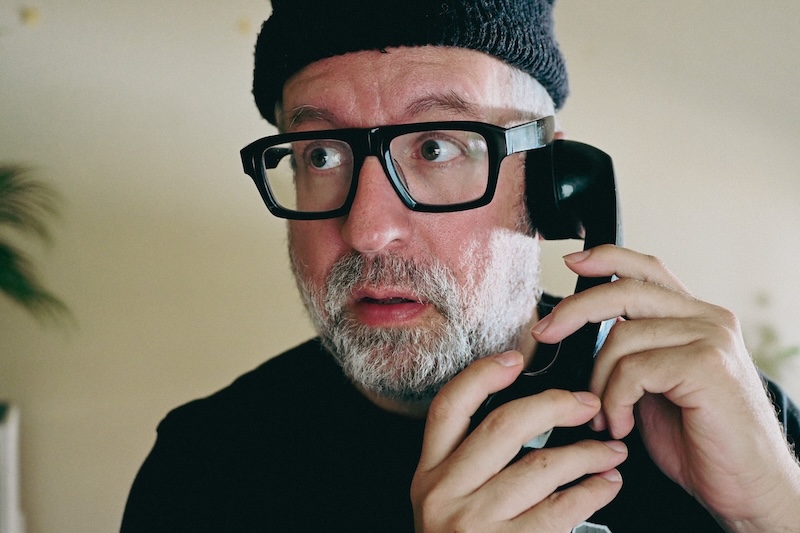
Seth on the phone

You’re tired of social media, but wondering if there’s life after the newsfeed. That’s exactly what we figure out here – together. 🏳️‍🌈🏳️‍⚧️

See our upcoming Zoom schedule

Email me: seth@socialmediaescape.club

Subscribe via RSS